
About Where’s The Scares?
A horror jump scare database with verified counts, timestamps, and recovery metrics.
10 Horror Movies with Dogs that Steal the Spotlight
Published January 1, 2026
This article may contain affiliate links. As an Amazon Associate we earn from qualifying purchases.
In horror, a dog is rarely “just a pet.” Horror movies with dogs have given the genre some of its most unforgettable four-legged characters, from rabid terrors to fiercely loyal protectors. These canines often become the emotional center of the story, for better or worse.
There’s something powerful in seeing “man’s best friend” pushed to the brink. When that bond is corrupted or tested, the fear cuts deep. From heroic protectors to pure nightmare fuel, here are 10 Horror Movies with Dogs That Steal the Spotlight.
Zoltan
Zoltan, Hound of Dracula (1978)

Zoltan is a reanimated Doberman Pinscher linked to the Dracula bloodline. Zoltan, Hound of Dracula uses classic vampire mythology but turns the threat into an undead attack dog, a twist popular during a late-1970s wave of dog-centered horror.
While “vampire dog” sounds like a B-movie gimmick, the film treats the threat with surprising sincerity. The sight of elongated fangs on a snarling Doberman pushes familiar Dracula imagery into something faster and more visceral. Often cited as an early example of dog-driven horror, it remains a cult deep cut within the genre’s canine canon.
Thor
Bad Moon (1996)

Thor, the Harrison family’s German Shepherd, is arguably the most competent character in Bad Moon. When Uncle Ted moves his trailer onto the family property, Thor instantly senses something is wrong, putting him at odds with a growing supernatural threat.
Unlike many dogs in horror who become or succumb to threats, Thor takes action. His unease around Ted, tense standoffs, and constant vigilance drive the film forward. Often overlooked in horror discussions, he stands as one of the genre’s rare autonomous canine heroes, protecting his family without influence, infection, or command.
Nanook
The Lost Boys (1987)

Nanook is Sam Emerson’s Alaskan Malamute and constant companion as his family settles into Santa Carla, a town secretly overrun by vampires. In The Lost Boys, Nanook’s loyalty to Sam is tested as the threat to the Emerson family grows.
That loyalty translates into action, placing him at the heart of the confrontation rather than watching from the sidelines. In a film packed with stylish vampires and larger-than-life personalities, Nanook remains one of the most fondly remembered defenders, leaving a lasting impression alongside the monsters that define the story.
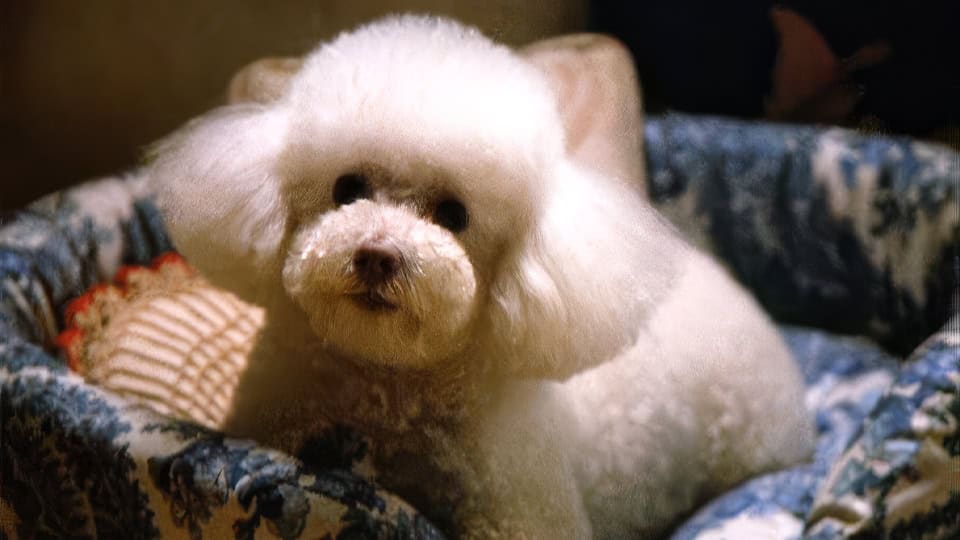
Precious is the small white Bichon Frise owned by serial killer Jame Gumb. In The Silence of the Lambs, her soft, pampered presence stands in stark contrast to the brutality unfolding around her.
That contrast makes her unforgettable. Precious is neither a threat nor a protector; she embodies a fragile innocence that offers a glimpse into Jame Gumb’s fractured humanity. In a story defined by psychological tension and cruelty, her presence reveals a sliver of something unexpected. Even in one of horror’s most iconic thrillers, this tiny dog leaves a lasting impression.
Max
Man’s Best Friend (1993)

Max is a genetically engineered Tibetan Mastiff mix created in a secret research facility as the ultimate weapon. Stronger, smarter, and faster than any ordinary dog, he represents an attempt to weaponize loyalty. In Man’s Best Friend, he escapes, unleashing the consequences of those enhancements.
Max stands out because he is the result of human experimentation, not infection or possession. Modified and conditioned beyond natural limits, he reflects early-1990s anxiety about unchecked scientific advancement. The horror of Max isn’t that he’s “evil,” but that human intervention has stripped away his gentle nature. He is less a pet and more a product, shaped by the fear of what happens when we try to control nature.
The Zombie Dogs
Resident Evil (2002)

Transformed by the T-Virus, these former guard dogs are stripped of skin and control. In Resident Evil, these Dobermans are no longer dogs; they are rotting, high-speed engines of infection, turning every hallway into a death trap.
In the original video games, they became the franchise’s quintessential jump scare, known for bursting through windows and sprinting through narrow corridors with relentless aggression. The film adaptation preserves that panic, unleashing them in tight spaces where their explosive lunges leave nowhere safe. Already iconic in the games, their appearance on screen carried that terror into mainstream cinema, expanding survival horror beyond the console.
The Black Rottweilers
The Omen (1976)

As the silent guardians of the Antichrist, the Rottweilers in The Omen possess an unnatural, studied stillness. These dogs don’t need to snarl to be terrifying; they just need to watch. That stillness makes them feel less like animals and more like ancient, demonic sentinels tied to their dark master.
Unlike the instinct-driven action often seen in film dogs, these animals rarely act. A motionless shape at the end of a corridor, a steady presence in the background, or a silent figure appearing without warning intensifies the film’s slow-burning dread. In that quiet, the black Rottweilers feel less like threats and more like signs of inevitability, marking moments when the film’s darker forces feel closest.
Sam
I Am Legend (2007)

Sam (Samantha) is the emotional core of I Am Legend. In a world emptied by a plague, she is Robert Neville’s only link to his former life and his sanity. She doesn’t just provide protection; her presence softens the silence of isolation and offers a sense of connection in an overtaken world.
Sam stands out not for aggression or spectacle, but for the emotional weight she carries for Robert. Their partnership transforms survival from solitary endurance into shared purpose, grounding the film’s bleak landscape in routine and connection. Amid crumbling structures and looming threats, Sam represents what is still worth holding on to, even after everything else has fallen away.
Kennel-Thing
The Thing (1982)

The Alaskan Malamute in The Thing wanders into an isolated Antarctic research station and is taken in. Calm and quiet, it moves freely through the outpost, an unexpected companion in a harsh, frozen environment. That easy acceptance makes what follows all the more jarring.
Yet this calm is short-lived. When confined with the other dogs, the friendly Malamute transforms into a mass of writhing tentacles and distorted flesh, shattering any remaining sense of safety and providing undeniable proof that the threat is now among them. In that moment, the film asks its most terrifying question: if you can’t trust a dog, who can you trust?
Cujo
Cujo (1983)

Cujo, a St. Bernard, is the gold standard for “the dog that stole the spotlight.” There is no supernatural curse or alien virus here, just a 200-pound family pet brought down by rabies.
What follows has no mythology. Only rabies, heat, and helplessness. The horror of Cujo comes from its grounded, claustrophobic simplicity. The danger does not come from somewhere unknown; it stays close, pressing against a car window in the middle of an ordinary day, waiting in plain sight. Cujo is frightening not because he is extraordinary, but because he is familiar. He remains the most iconic horror dog because he represents a deeper fear: that the things we love and trust most can turn on us without warning.
From heroic German Shepherds to genetically altered nightmares, these dogs have earned their place in horror history by doing more than just barking at the dark. Whether they break our hearts or make them skip a beat, these iconic canines prove you don’t need dialogue to steal the spotlight.